

 Image 1 of 1
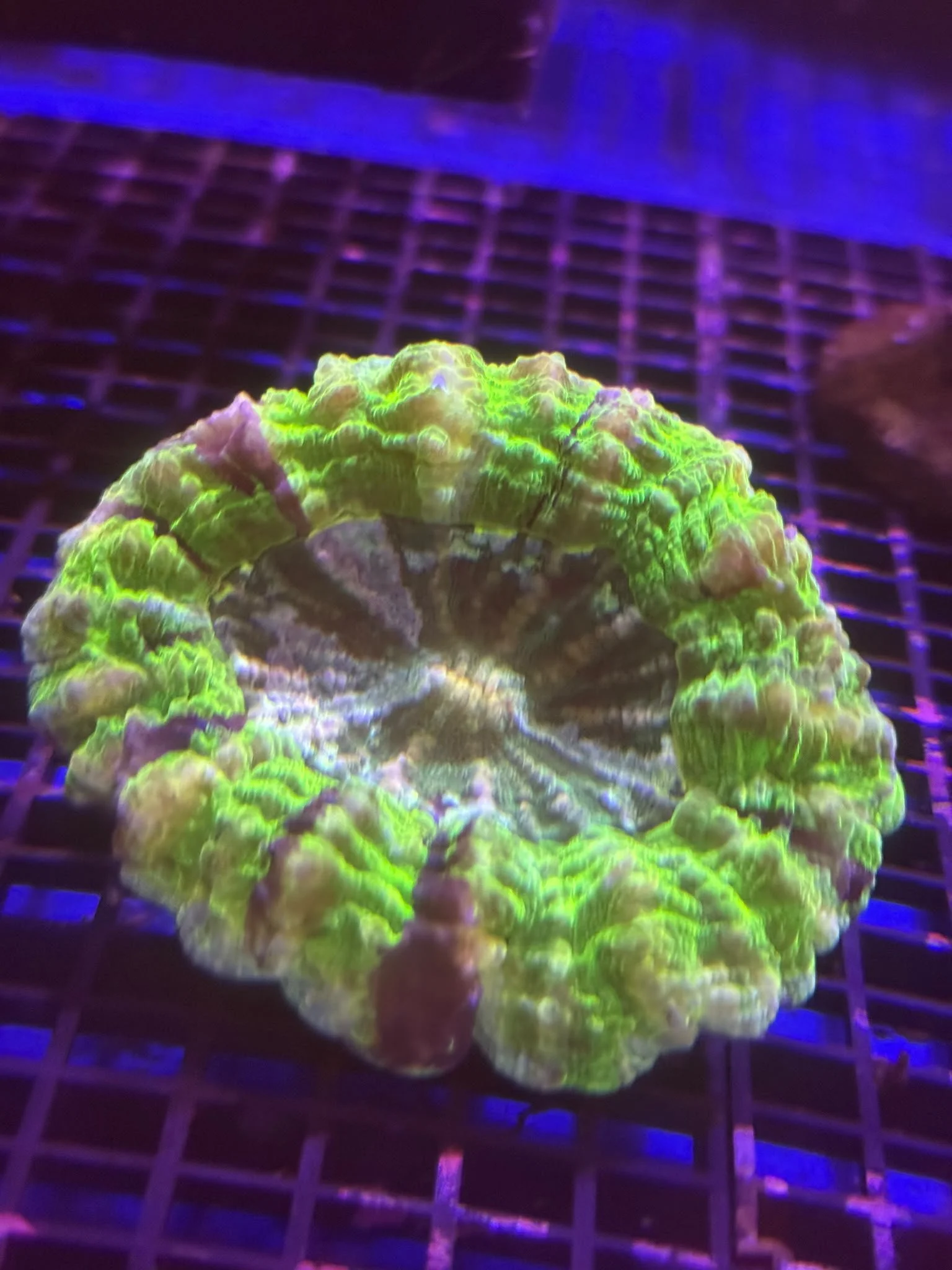
WYSIWYG!
Difficulty: Moderate
Temperament: Peaceful to Semi-Aggressive (can sting neighbouring corals)
Growth Rate: Slow (dependent on water conditions)
Placement: Bottom, on Sandbed
Lighting: Low to Moderate
Flow: Low to Moderate, Indirect
Ideal Parameters:
24-27°C
1.024 - 1.026 Salinity
8.1 - 8.4 PH
8 - 11 KH
400 - 450 Calcium
1250 - 1350 Magnesium
5 - 20 Nitrates
0.03 - 0.10 Phosphates
Additional Care:
Acanthophyllia Corals, commonly known as Meat Corals, are spectacular Large Polyp Stony (LPS) corals prized for their exceptionally large, fleshy polyps, vibrant colours and intricate patterns. These impressive solitary corals are available in a stunning variety of colour combinations, often displaying beautiful marbling, stripes and fluorescent markings. They thrive in mature, stable reef aquariums with low to moderate lighting and gentle, indirect water movement.
Acanthophyllia are best placed on a soft, open sandbed where their delicate fleshy tissue can expand naturally without coming into contact with sharp rocks or abrasive surfaces. Their large polyps can inflate considerably throughout the day, so plenty of space should be provided to accommodate their full expansion. Excessive lighting can cause bleaching or tissue retraction, making gradual light acclimation particularly important.
These corals benefit from occasional target feeding with appropriately sized meaty foods such as mysis shrimp, finely chopped seafood or specialised LPS coral foods. Although they obtain much of their energy through photosynthesis, supplemental feeding can help support healthy tissue development and long-term growth. Avoid overfeeding or offering excessively large pieces of food, as this may cause stress or regurgitation.
Acanthophyllia are generally peaceful but can sting neighbouring corals through direct contact. Their delicate tissue is particularly vulnerable to damage from aggressive tankmates, strong currents and sharp rockwork. Maintaining stable alkalinity, calcium and magnesium levels is essential for healthy skeletal development, while avoiding sudden changes in lighting, flow or water chemistry will help ensure long-term success.